About Blood Pressure Monitors
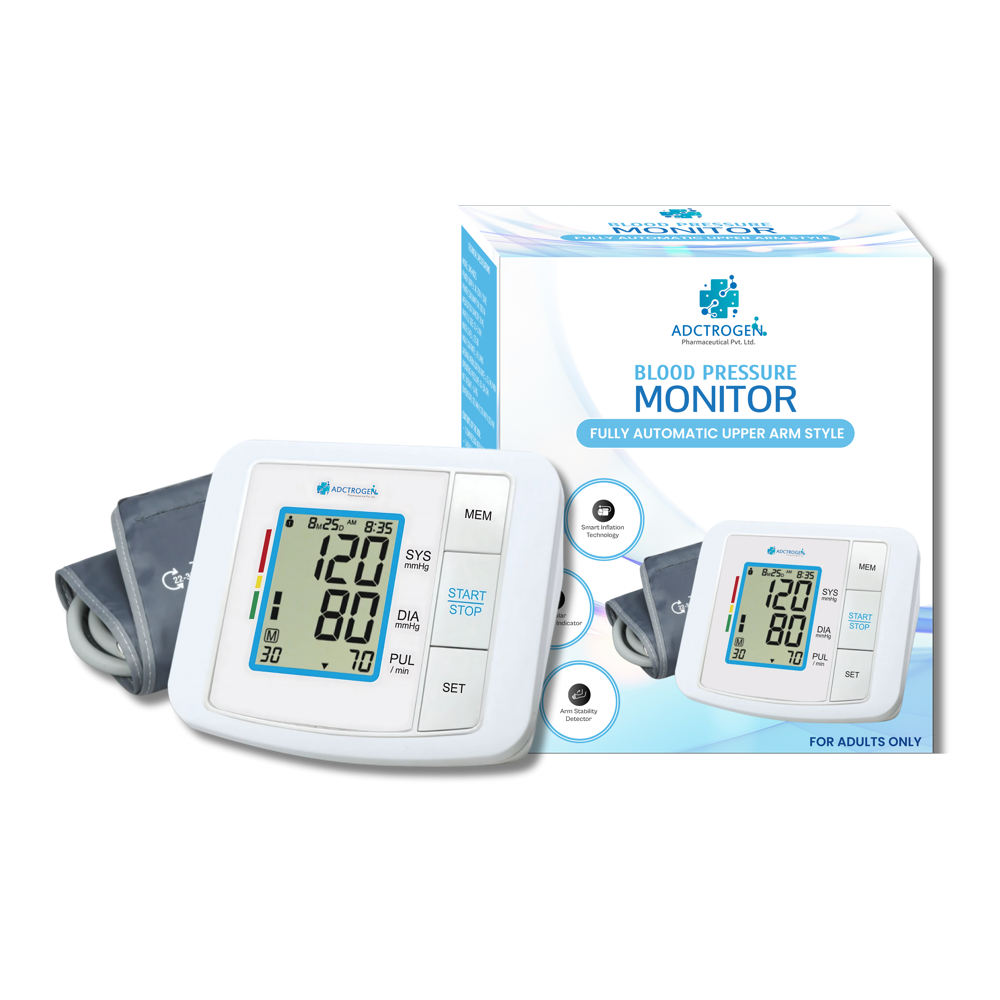
A blood pressure monitor, also known as a sphygmomanometer, isa device used to measure blood pressure, which indicates the force of blood pushing against the walls of arteries.It typically consists of an inflatable cuff that wraps around the upper arm, a pressure gauge (either manual or digital), and sometimes a stethoscope for listening to blood flow sounds.Advanced Accuracy and Easy OperationThe monitor provides precise readings within an accuracy level of 3 mmHg for pressure and 5% for pulse rate, ensuring confidence in every result. With its one-touch fully automatic process and voice prompts, users can easily measure blood pressure at home or in clinical settings without specialized training. The WHO indicator, auto-off function, and irregular heartbeat detection further enhance both safety and usability.
User-Centric Design and VersatilityBuilt with comfort and usability in mind, the device offers a standard or large size cuff made of durable ABS plastic, PVC, and rubber. The cuff accommodates a wide range of arm sizes, while the compact rectangular monitor comes in white, grey, blue, or black. Its portability and wall-free installation make this monitor a perfect companion for frequent travelers or healthcare professionals alike.
FAQ's of Blood Pressure Monitors:
Q: How does the blood pressure monitor operate?
A: This digital monitor operates fully automatically using oscillometric measurement technology. Simply wrap the Velcro-based adjustable cuff around your arm, press the one-touch button, and the device will inflate, measure, and display your blood pressure and pulse rate within seconds.
Q: What makes this monitor suitable for both home and clinical use?
A: The monitor's advanced accuracy, user-friendly one-touch operation, and large memory storage (90-240 readings per user) make it ideal for individual monitoring as well as professional applications at hospitals and clinics. Its portability and various cuff sizes further enhance its suitability across different settings.
Q: When should I use this device to monitor my blood pressure?
A: It is best to measure your blood pressure at the same time each day, ideally before meals and medications, and after resting quietly for five minutes. This helps ensure consistent and comparable readings for effective tracking.
Q: Where should I store the blood pressure monitor?
A: Store the monitor in the provided pouch, keeping it in a cool, dry place. Avoid exposure to moisture or extremely high temperatures to maintain device performance and reliability.
Q: What benefits does the device offer over manual blood pressure monitors?
A: Compared to manual devices, this monitor provides automatic pressurization, voice prompts, irregular heartbeat detection, one-touch operation, and a digital display, making it easier, faster, and more accurate for all users.
Q: How do I know if the monitor's battery is low or needs replacing?
A: The device features a low battery indicator on the display. When the indicator appears or the device powers off unexpectedly, replace the AAA batteries or use the supplied adaptor for continued use.





 Send Inquiry

